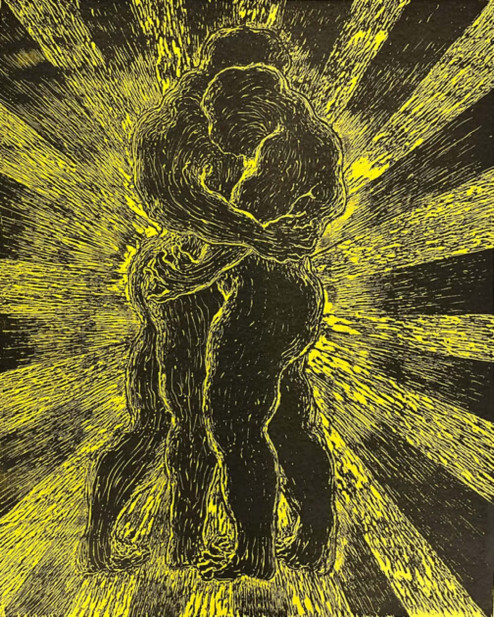
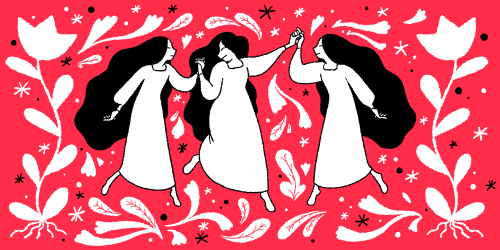
Summer Dance
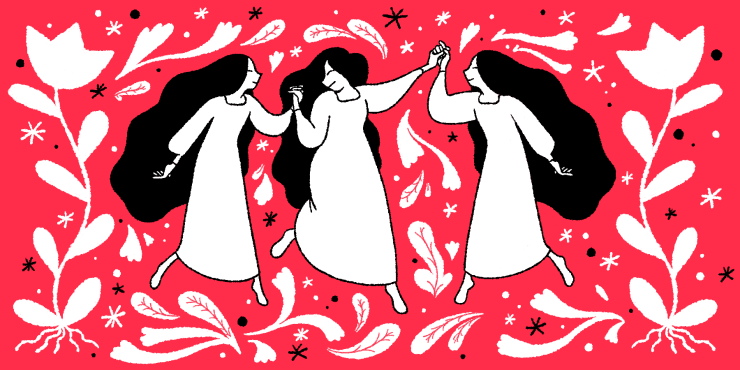
Artist
Taylor Mauldin ’20 (Illustration BFA)
Date
2020
Medium
Digital
February 5–March 8, 2026
Meyerhoff Gallery, Fox Building
1303 W Mount Royal Ave
Admission: FREE and open to the public
Gallery Hours: Monday–Sunday 10:00AM–5:00PM.On weekends, outside visitors will need to be accompanied by a 足球游戏_中国足彩网¥体育资讯 community member with a 足球游戏_中国足彩网¥体育资讯 ID in order to swipe and gain access into respective buildings.
Opening Reception: Thursday, February 5, 5:00PM–8:00PM
The Maryland Institute College of Art’s (足球游戏_中国足彩网¥体育资讯) Curatorial Practice MFA is proud to announce Ouroboros, an exhibition on view February 5 through March 8, 2026, at the Meyerhoff Gallery. The show features eleven artists with deep connections to 足球游戏_中国足彩网¥体育资讯 and the city working through printmaking, photography, collage, textiles, illustration, and performance. It examines the mutual connections and enduring tensions between 足球游戏_中国足彩网¥体育资讯 and Baltimore—particularly in the face of systemic erasure.
Ouroboros positions 足球游戏_中国足彩网¥体育资讯’s Bicentennial as a moment of reflection, and includes an in-gallery archive that investigates the coexistence of 足球游戏_中国足彩网¥体育资讯 and Baltimore’s artistic communities over the past two centuries. The show reveals the interdependence between 足球游戏_中国足彩网¥体育资讯’s pedagogical legacy and Baltimore’s grassroots culture through partnerships with community resources to build the archive, a free library of historical content. Ouroboros represents an interactive process of research and collaboration that continually brings forward narratives shaping the identities of artists, the institution, and the city.
The Bicentennial celebration arrives at a crucial moment as national and local administrations adopt policies that deport international students, defund cultural institutions, and restrict the teaching of race, gender, and equity. Ouroboros responds by leveraging 足球游戏_中国足彩网¥体育资讯’s 200-year legacy to invoke acknowledgment and accountability, providing a framework for how institutional histories converge with broader social, political, and cultural contexts. The curatorial team invites viewers to consider how art education institutions might reconsider their relationships with the places they occupy, and how artists move through or work around institutions to create space for themselves.
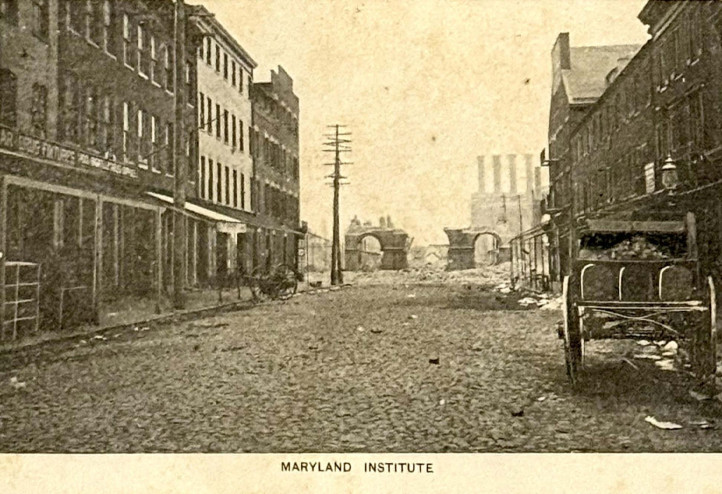
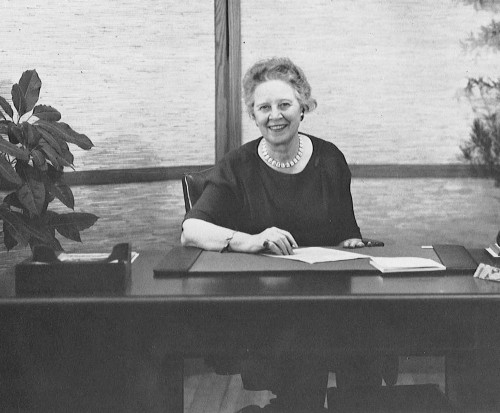
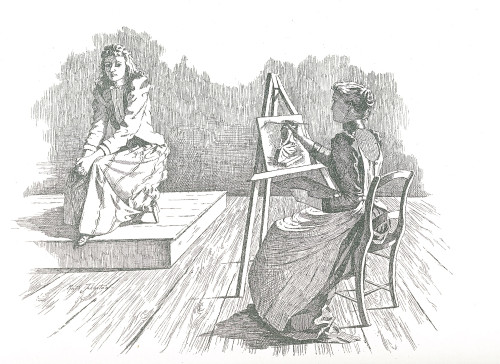
Annette Smith Burgess graduated from the Maryland Institute for the Promotion of the Mechanical Arts (now 足球游戏_中国足彩网¥体育资讯) where she studied Medical Illustration under Max Br?del. Burgess illustrated the Atlas Fundus Occuli. As the first medical illustrator of the Wilmer Eye Institute, Burgess drew and painted over a thousand images of eye anatomy to help with making diagnoses and treatment for ocular medicine.
Rosa Chang was born in Seoul, Korea, and lives and works in Baltimore as an artist, educator, and Executive Director of Hand Papermaking, Inc. Her practice explores the relationship between humans and the natural world through materials, process, and community engagement. She currently focuses on sharing the cultural significance of Korean and Asian traditional indigo and natural dye practices through workshops, teaching, archival journals, and cross-cultural exchange.
Lola Flash has worked at the forefront of genderqueer visual politics for more than four decades. Their work challenges stereotypes and gender, sexual, and racial preconceptions, fueling a life-long commitment to visibility and preserving the legacy of LGBTQIA+ and communities of color worldwide.
Kei Ito is an interdisciplinary artist whose practice is grounded in the legacy of his grandfather, a survivor of the atomic bombing of Hiroshima, and shaped by his position as a third-generation hibakusha and immigrant living in the United States. Working through camera-less photography, performance, and installation, Ito explores how trauma—both personal and planetary—is carried across time.
Dr. Virginia Jackson Kiah was a figurative artist, civil rights activist, educator, philanthropist, and the eldest daughter of Baltimore NAACP President, Lillie Carroll Jackson. After being denied admission to 足球游戏_中国足彩网¥体育资讯 due to her race, Kiah enrolled at the Pennsylvania Museum of Art’s Industrial School for the Arts to study portraiture. Committed to creating open-access spaces for the public, she opened the Kiah Museum for the Masses in 1959. Kiah later founded the Lillie Carroll Jackson Civil Rights Museum in 1978, Baltimore’s first privately owned museum honoring an African American woman.
Juan Miguel Marín is an Ecuadorian multidisciplinary artist, based in Brooklyn, NY (Canarsie Ancestral Lands) whose art practice studies the relationship between memory, sound, and emotion. His work is also an ongoing meditation on his own journey as an immigrant: a constant search for home within the self.
Edgar Reyes was born in Guadalajara, Mexico, and is a multimedia artist and professor based in Baltimore. He is driven by the desire to raise an awareness and question the ongoing displacement of his community and their native rituals that transcend current national borders. Many of his projects are autobiographical and a reflection of his personal journey as an undocumented youth in the United States, demonstrating the adversities his family faced such as deportations, lost loved ones, and racially motivated crimes.
Theophobia is a New-York based, Baltimore-native music and comedy performance group founded in 2019 by childhood friends Dylan Mars Greenberg and Matt Ellin. Named for the pair's shared existential neuroses, Theophobia’s ecstatic pop performances blend the shimmering new wave of the 1980s with the art-infused comedy of Andy Kaufman.
Bria Sterling-Wilson is a Baltimore-based photographer and collage artist. In 2021, she earned her BFA in Photography and Digital Arts from Towson University in Towson, Maryland. Sterling-Wilson’s work utilizes found imagery, magazines, newspapers, and fabrics to create captivating scenes, portraits, and interiors that explore the Black experience.
Pete Ross is a Banjo maker, researcher, and musician based in Baltimore, MD. He is one of earliest contemporary makers of gourd banjos, ranging from those of his own design to exact replicas of historic instruments. His reconstructions of eighteenth- and early nineteenth-century banjos have been featured internationally in museums, art galleries, movies, documentaries, and live performances.
Rafael Soldi is a Peruvian-born artist and independent curator based in Seattle. Working across video, photography, installation, and text, his practice explores masculinity, language, immigration, and memory, grounded in his queer, Peruvian identity. His work surveys how gender expectations are encoded in language and how they can be subverted through play, intimacy, and bilingual experience.
Didier William was born in Port-Au-Prince, Haiti, and is a Philadelphia-based mixed-media painter and printmaker. His work focuses on constructions of Blackness that include the nuances of diasporic identity, and his own experiences of immigrating to the United States from Haiti. He is currently Associate Professor of Expanded Print at Mason Gross School of the Arts at Rutgers University.
Grace Cleary is an art historian focused on excavating lost narratives within museums and developing new strategies to foster accessibility in the arts.
Ryn Dillon is a scholar studying the interplay of existentialist philosophy, extinction, and internet subcultures on the human perception of “free will.”
Melissa Minseo Oh is a curator and artist investigating what it means to change, survive, and exist in multiple worlds at once.
Azul Rodriguez is a visionary artist and community organizer for therapeutic art practices, resource access, and education.
Norton Reyes-Vargas is a researcher and marathon runner exploring decolonial art practices across Latin America.
足球游戏_中国足彩网¥体育资讯's MFA in Curatorial Practice prepares students to determine how curators will shape the cultural life of our global society. The first MFA of its kind in the country, the program offers a hands-on curriculum that balances collaboration and socially engaged practices with academic research in history and theory. Students work in a variety of experimental contexts and formats, proposing alternative models of exhibition-making, institution-building, and social justice through art.
Founded in 1826, Maryland Institute College of Art (足球游戏_中国足彩网¥体育资讯), which celebrates its bicentennial in 2026, is the nation’s oldest, independent, continuous degree-granting college of art and design. Located in Baltimore City, 足球游戏_中国足彩网¥体育资讯 is deeply connected to the local and regional community. It is a leading contributor to the creative economy and a top producer of nationally and internationally recognized professional artists and designers.
Ouroboros is made possible by The Stanley Mazaroff & Nancy Dorman Endowed Fund for Curatorial Practice and Friends of Curatorial Practice MFA.
Join the festivities as 足球游戏_中国足彩网¥体育资讯 honors its 200-year history, recognizes its present success, and looks forward to a bright future. Throughout 2026, the College will be sharing community stories and announcing one-of-a-kind events on campus, in Baltimore, and beyond.
 + Enlarge